
Sub-Total: $0.00
Heavy Duty Outdoor Light Frames: 2026 Review Guide
| Blog
Table of Contents
- Heavy Duty Outdoor Light Frames: What Separates Real Durability From Marketing Claims
- Outdoor Light Frame Materials: Galvanized Steel vs Die-Cast Aluminum vs Powder-Coated Metal
- Powder-Coated Metal Light Frames: What the Coating Really Does
- Load-Bearing Capacity and Structural Integrity Under Snow and Ice
- Wind-Resistant Holiday Displays: Mounting Brackets, Anchors, and Wind Loading
- Retrofitting Existing Frames and the Environmental Impact of Frame Materials
- Verdict: Which Heavy Duty Outdoor Light Frames Are Worth Your Money
- Frequently Asked Questions
Last Updated: October 9, 2026
Heavy Duty Outdoor Light Frames: What Separates Real Durability From Marketing Claims
Walk through any big box store in November and you will find shelves stacked with light frames that look sturdy in the box. Most of them fail within two seasons. The difference between a heavy duty outdoor light frame and a disposable one comes down to three things: the metal it is built from, how that metal is protected, and how the frame is anchored to your house.
We have seen how quickly a cheap frame turns brittle after one hard winter. The wire twists, the coating flakes, and by February you are throwing the whole thing in the trash. Below, we will show you exactly how to spot the difference before you buy, and what to look for in outdoor light frames that are genuinely built to last.
Why the Frame, Not the Bulbs, Decides How Long Your Display Lasts
Most shoppers focus on the lights. That is backwards. A bulb is cheap to replace; a bent or rusted frame is not. The frame carries the weight of the lights, the snow, and the wind load, season after season. If the frame fails, the whole display fails with it.
A heavy duty outdoor light frame is the rigid structure that holds bulbs, wiring, and decorative shapes in place against weather, impact, and time. It is the skeleton, and everything else depends on it.
Key Takeaway
You can replace a burned-out bulb in minutes. Rebuilding a collapsed frame means replacing the entire display. Spend your budget on the frame first.
You can replace a burned-out bulb in minutes. Rebuilding a collapsed frame means replacing the entire display. Spend your budget on the frame first.
Outdoor Light Frame Materials: Galvanized Steel vs Die-Cast Aluminum vs Powder-Coated Metal
The material choice is the single biggest predictor of how long a frame survives. Powder-coated metal delivers an excellent combination of durability and finish.
Here is how the three common outdoor light frame materials compare:
| Material | Strength | Corrosion Resistance | Best For | Trade-off |
|---|---|---|---|---|
| Galvanized steel | Highest | Good (zinc layer) | Snow load, large frames | Heavier to hang |
| Die-cast aluminum | Moderate | Excellent | Coastal, humid climates | Costs more per frame |
| Powder-coated metal | High | Very good | Most home displays | Coating can chip if struck |
Powder-coated metal frames combine a strong base with a baked-on finish that resists chipping far better than paint.
How Corrosion Resistance Is Actually Tested
Corrosion resistance testing is where most marketing claims fall apart. Reputable manufacturers use salt spray testing, which exposes a coated sample to a continuous salt fog and measures how long it takes before rust appears. Standards bodies publish the procedures for this kind of testing, and you can read the details through the ASTM salt spray testing standards.
Look for a stated salt spray hour rating on the spec sheet. A frame rated for hundreds of hours in a salt fog chamber will hold up in a real yard for years. A frame with no rating at all is a guess.
For coastal homes, this matters more than any other specification. Salt air attacks metal faster than rain or snow ever will.
Powder-Coated Metal Light Frames: What the Coating Really Does
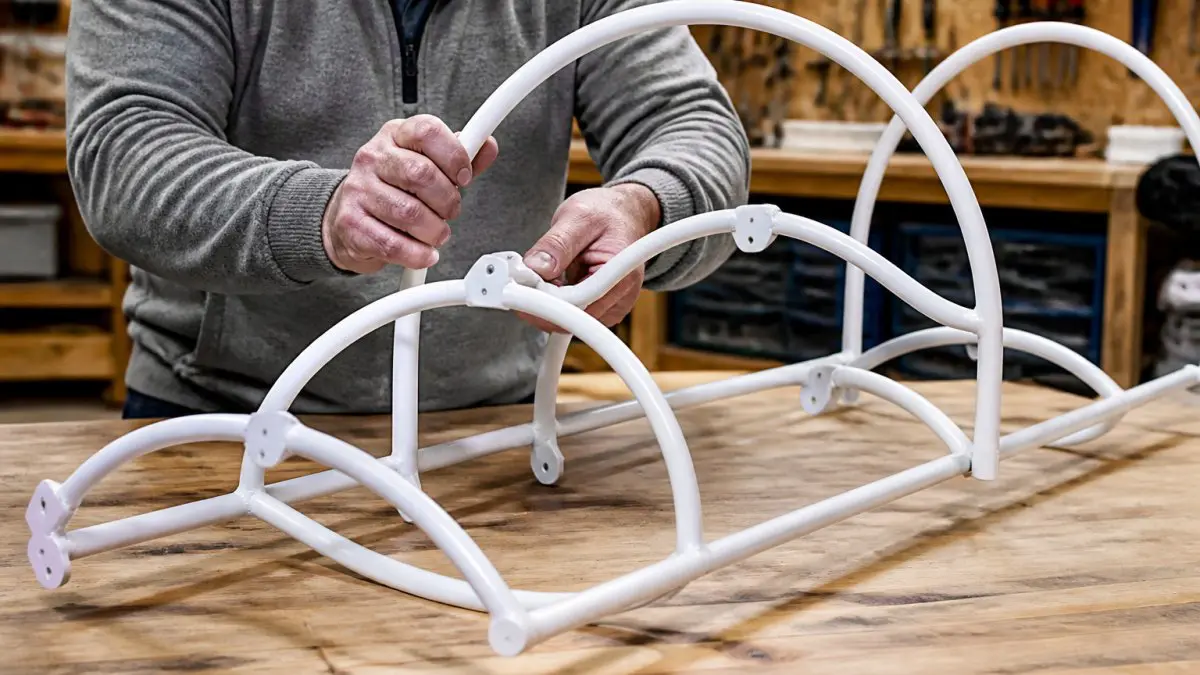
Powder coating is a dry finishing process where electrically charged powder is sprayed onto the metal and then baked into a hard, uniform shell. It is not paint. The result is a thicker, tougher surface that resists chipping, fading, and moisture far better than a liquid finish.
Powder-coated metal light frames hold their color and finish longer because the coating bonds to the metal at a molecular level. There are no solvents to evaporate, so the finish does not thin out over time the way paint does.
What most guides miss is that surface preparation determines whether the coating lasts. If the metal is not cleaned and pretreated properly, the powder will not adhere, and it will flake off within a season.
Pro Tip
Run a fingernail along an edge of the frame before you buy. If the coating lifts or flakes easily, the surface was not prepped properly, and it will fail outdoors.
Run a fingernail along an edge of the frame before you buy. If the coating lifts or flakes easily, the surface was not prepped properly, and it will fail outdoors.
Load-Bearing Capacity and Structural Integrity Under Snow and Ice
Snow and ice are the heaviest loads a display will ever face, and most frames are never rated for them. A wet, dense snow can weigh several times more than a dry powder snow of the same depth, and every horizontal run of a frame, the top of an arch, the flat of a star, the crossbar of a reindeer, collects it. If the structure was not engineered for that load, it will sag, twist, or snap, and it usually fails at a joint rather than in the middle of a straight run.
Structural integrity comes down to four factors, and you can evaluate all four from a spec sheet or a hands-on inspection:
- Metal gauge. Gauge is a thickness measurement, and lower numbers mean thicker metal. A frame built from 14-gauge steel is meaningfully stiffer than one built from 20-gauge, and the difference shows up the first time snow sits on it. Ask for the gauge, not the word “heavy duty.”
- Joint type. Welded joints resist bending far better than crimped, stapled, or snap-fit joints. Count the welds at every corner and T-intersection. A frame with a weld at each load path is a different product than one held together by friction.
- Unsupported span. The longer the distance between support points, the more the frame deflects under load. A 6-foot unsupported span behaves very differently from a 2-foot span in the same gauge of metal. If a frame has long horizontal runs, it needs either thicker metal or an added support point.
- Bracing and triangulation. Diagonal braces convert a wobbly rectangle into a rigid triangle. Frames with corner gussets or diagonal cross-bracing hold their shape under wind and snow far better than open rectangles.
How to Think About Load Without a Lab
You do not need an engineering degree to sanity-check a frame. A common pattern among practitioners is to estimate the snow load on the horizontal surfaces, add the weight of the lights and wiring, and then compare that total against how the frame is supported.
A practical test in the store or on delivery: press down firmly on the longest unsupported run with two fingers. A frame built for real snow load will feel like a spring and return to shape. A frame built for a light dusting will flex, creak, or stay slightly bent. That bend is permanent deformation, and it will only get worse outdoors.
Key Takeaway
Ask three questions before you buy: What gauge is the metal? How many welded joints are in the load path? What is the longest unsupported span? If the seller cannot answer, the frame is not rated for snow.
Ask three questions before you buy: What gauge is the metal? How many welded joints are in the load path? What is the longest unsupported span? If the seller cannot answer, the frame is not rated for snow.
Why This Matters More Than the Light Rating
A light fixture’s rating tells you how it performs in a fixture. It says nothing about whether the frame holding it will still be square after a February storm. The frame is the load path, and the load path is what fails. When you compare two frames at similar prices, the one with thicker metal, more welds, and shorter spans is almost always the better long-term buy, even if it weighs more and costs a little more to ship.
Wind-Resistant Holiday Displays: Mounting Brackets, Anchors, and Wind Loading
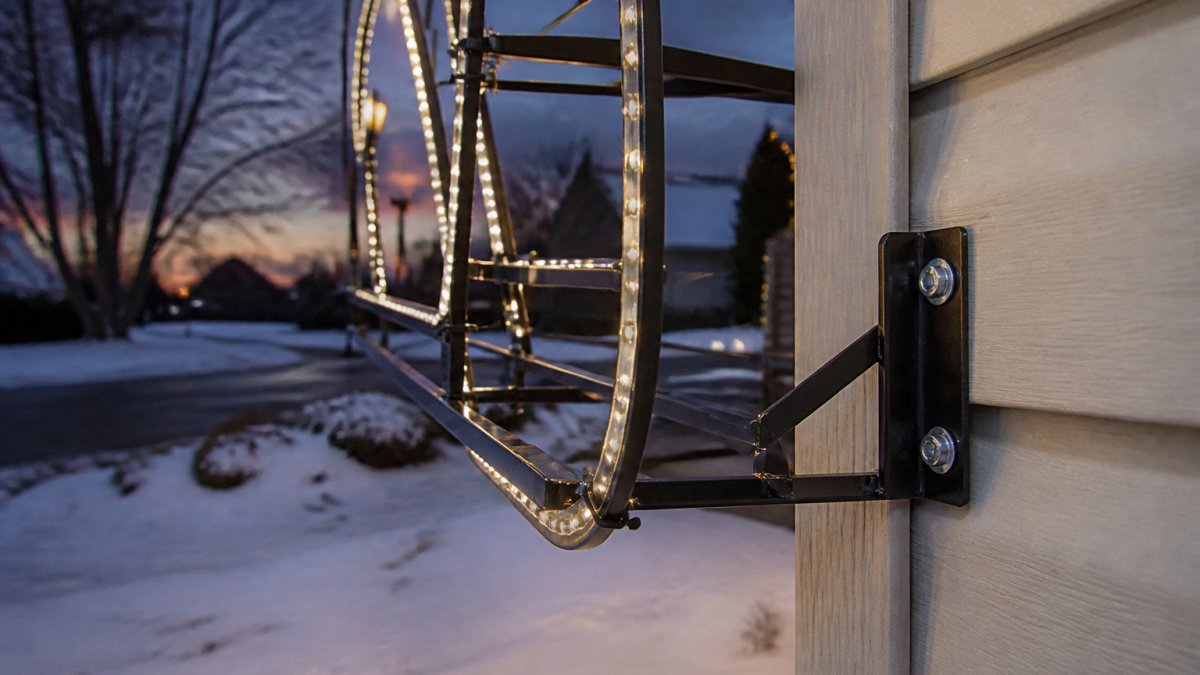
Wind destroys more displays than snow does, and the failure almost always starts at the mounting point. A wind-resistant holiday display depends on three things working together: a rigid frame, a heavy-duty mounting bracket, and anchors rated for your wall material.
The most common mistake is using the small plastic clips that come in the box. They pull out of siding under the first strong gust. Instead, use metal mounting brackets screwed into structural material, with anchors matched to brick, stucco, or wood.
Watch Out
Never anchor a frame into vinyl siding alone. The siding will flex and release the fastener in high wind, sending the entire display into the yard. Anchor into the sheathing or framing behind it.
Never anchor a frame into vinyl siding alone. The siding will flex and release the fastener in high wind, sending the entire display into the yard. Anchor into the sheathing or framing behind it.
Wind loading also depends on how much surface area your display presents. A solid, flat shape catches far more wind than an open, skeletal frame. If you live in a windy area, favor frames with open designs and secure them at multiple points, not just one.
Retrofitting Existing Frames and the Environmental Impact of Frame Materials
Before you replace an old display, check whether it can be retrofitted. A sound frame can often be re-coated, re-wired, or fitted with new brackets, which keeps a usable structure out of the landfill and saves money.
The environmental case for retrofitting is straightforward. Metal production is energy-intensive, so extending the life of an existing frame avoids the emissions and mining impact of making a new one. Steel and aluminum are both highly recyclable, and choosing a durable, repairable frame is one of the most effective ways to reduce the waste your display generates over its lifetime.
If a frame is bent beyond repair, recycle the metal rather than trashing it. Most scrap yards accept both steel and aluminum.
Pro Tip
A frame with surface rust but solid joints is usually worth saving. Sand it, re-coat it, and it can serve another decade.
A frame with surface rust but solid joints is usually worth saving. Sand it, re-coat it, and it can serve another decade.
Verdict: Which Heavy Duty Outdoor Light Frames Are Worth Your Money
The frames worth buying share the same traits: thick metal, properly prepped powder coating, welded joints, and real mounting hardware. Everything else is marketing.
At The Holiday Light Store, every frame is handmade and powder-coated in the USA, built for the freeze-thaw cycles and wind gusts that wreck cheap displays. Our animated light sculptures are designed to be anchored properly and to hold their shape season after season, so you are not replacing them every other year.
If you want a display your grandkids will remember, start with a frame that will still be standing when they come back next December.
Frequently Asked Questions
What makes an outdoor light frame heavy-duty?
Three things separate a heavy-duty outdoor light frame from a flimsy one: the metal itself, the coating, and the mounting hardware. Look for a powder-coated finish that resists chipping, and brackets rated to carry the frame’s weight plus snow load. If a product page lists none of these, treat it as decorative, not structural.
What is the most durable material for outdoor light frames?
Powder-coated finishes add a protective layer over metal. The best choice depends on your display size and climate.
How do I keep outdoor light frames stable in wind?
Wind-resistant holiday displays depend on anchoring, not just frame weight. Use mounting brackets fastened into studs or masonry anchors rather than siding alone, add guy lines or ground stakes for freestanding pieces, and keep large frames close to the wall to reduce leverage. A photocell or dusk-to-dawn timer does not help with wind, but it does reduce how often you climb up to check connections. Inspect anchors after the first big storm of the season.
Can I retrofit an existing light frame instead of buying new?
Often yes. If the frame’s structural integrity is intact, you can replace corroded mounting hardware, re-coat rust spots with a matching powder-coat touch-up or rust-inhibiting paint, and upgrade to energy-efficient LED bulbs with the correct lumen output. Retrofitting makes sense when the metal is sound but the finish or wiring has failed. If the frame bends under hand pressure or shows deep rust at weld points, replacement is the safer call.
How should I store heavy duty outdoor light frames between seasons?
Clean and dry each frame fully before storage, since trapped moisture drives corrosion even on powder-coated metal. Label the mounting hardware in bags taped to the matching frame so reassembly is quick next season. Store frames flat or hanging in a dry space rather than stacked under heavy items, which can bend thin sections. A climate-controlled garage or basement extends the life of both the coating and the wiring far better than an unheated shed.
The hardest part of building a display that lasts is finding frames that were engineered for real weather, not just a photo shoot. The Holiday Light Store builds handmade, powder-coated outdoor light sculptures in the USA, with durable construction and a wide range of holiday themes designed to dazzle for years. Get started with The Holiday Light Store and build a display you will be proud to light up every season.
