
Sub-Total: $0.00
Handmade vs Mass Produced Holiday Decor
| Blog
Table of Contents
- Handmade vs Mass Produced Holiday Decor: Quick Comparison
- Quality and Durability: Why Handmade Holiday Decor Outlasts Mass-Market Options
- Durable Outdoor Holiday Light Displays: What Sets Handmade Apart
- The Benefits of Powder-Coated Light Sculptures for Long-Term Display
- Artisan Craftsmanship vs Industrial Production: The Real Differences
- Sustainability and Environmental Impact: Lifecycle Analysis
- Investment Value Over Time: Cost Per Year of Display
- Authenticity Verification Guide: How to Spot Genuine Handmade Decor
- Frequently Asked Questions
Last Updated: October 7, 2026
Handmade vs Mass Produced Holiday Decor: Quick Comparison
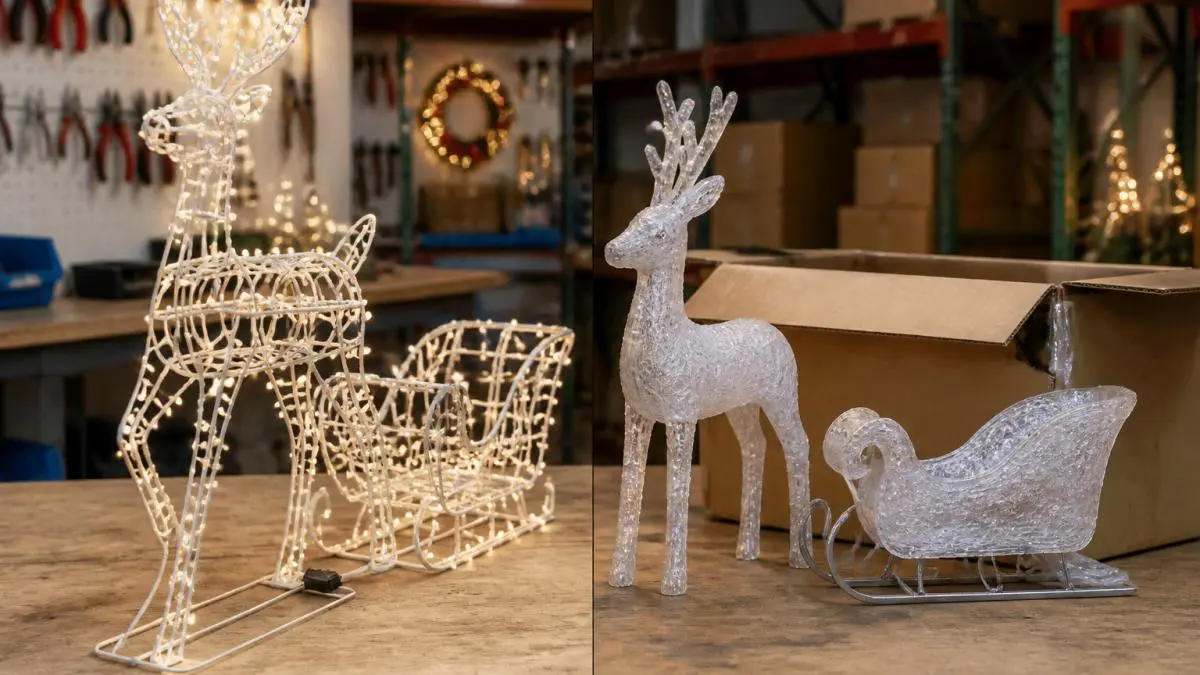
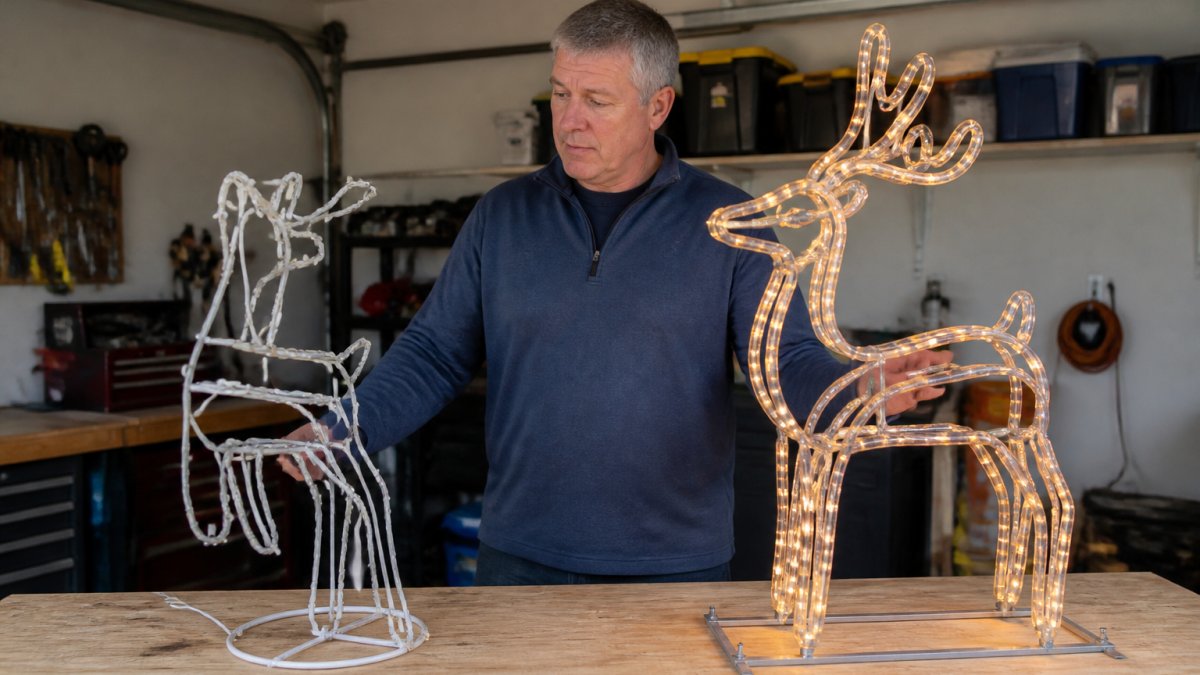
Handmade vs mass produced holiday decor comes down to one question: do you want a display that survives one season or one that becomes part of your family’s traditions? At The Holiday Light Store, we build powder-coated, American-made light sculptures for homeowners who are tired of replacing corroded big-box decorations every January.
Side-by-Side Comparison Table
| Factor | Handmade Decor | Mass Produced Decor |
|---|---|---|
| Typical lifespan | Many seasons with care | Often one to two seasons outdoors |
| Materials | Steel, powder coating, hand-finished | Thin metal, plastic, basic paint |
| Repairability | Components can often be replaced | Usually discarded when broken |
| Customization | Bespoke sizing and themes | Fixed designs only |
| Upfront cost | Higher | Lower |
| Cost per year of display | Falls the longer you keep it | Rises with each replacement |
Quality and Durability: Why Handmade Holiday Decor Outlasts Mass-Market Options
Handmade holiday decor outlasts mass-market options because makers choose materials for longevity, not for the lowest possible unit cost. A mass-market piece is engineered to hit a shelf price. A handmade piece is engineered to survive wind, rain, and freeze-thaw cycles. That difference shows up fastest outdoors, where cheap metal and thin plastic fail first.
Material Quality: Steel, Powder Coating, and Weather Resistance
Steel frames, powder coating, and sealed electrical connections are the three materials that decide whether a display survives winter. Mass-produced decor often uses thin stamped metal and basic spray paint, which chip and rust quickly. A common mistake is judging a decoration by how it looks in the store rather than how it is built. Weight is a useful clue: a heavier frame usually means more steel and less flex in high wind.
Durable Outdoor Holiday Light Displays: What Sets Handmade Apart
Durable outdoor holiday light displays are built around three things: a rigid frame, protected wiring, and a finish that resists moisture. Handmade builders typically weld or bolt frames rather than relying on clips and glue.
What most guides miss is that failure rarely starts with the bulb. It starts at the joint, the weld, or the plug.
The Benefits of Powder-Coated Light Sculptures for Long-Term Display
The benefits of powder-coated light sculptures come down to one advantage: the finish is fused to the metal instead of painted on top of it. Powder coating is applied as a dry powder and cured under heat, forming a hard shell that resists chipping, fading, and corrosion far better than wet paint. For anyone displaying decor outdoors season after season, that single difference extends the life of the piece.
How Powder Coating Prevents Corrosion and Fading
Powder coating prevents corrosion by sealing the steel away from moisture and oxygen. Because there is no liquid solvent in the finish, there are no thin spots or drips where rust can start. It also holds color better under ultraviolet light, so a red or green sculpture does not wash out after a summer in the sun.
Artisan Craftsmanship vs Industrial Production: The Real Differences
Artisan craftsmanship and industrial production differ in where the money goes. Industrial production spends on volume, tooling, and shipping. Artisan work spends on labor, materials, and finishing.
An artisan-made piece is usually built in small batches, which allows for hand-finished details and inspection at each stage. Mass manufacturing optimizes for speed, so quality control is sampled rather than individual.
Pro Tip
When you inspect any outdoor decoration, flex the frame gently and check the welds and plug seals. If it creaks or the paint flakes at a joint, that is where it will fail first.
When you inspect any outdoor decoration, flex the frame gently and check the welds and plug seals. If it creaks or the paint flakes at a joint, that is where it will fail first.
Sustainability and Environmental Impact: Lifecycle Analysis
Most holiday decor articles say handmade is “greener” and stop there. A real lifecycle comparison breaks a decoration into five stages, raw material extraction, manufacturing, shipping, use, and end-of-life, and asks how many seasons each stage’s impact gets spread across.
Stage 1: Raw Materials
Mass-produced decor typically relies on virgin plastics, thin stamped steel, and mixed-material assemblies (plastic housing glued to metal frames, coated wire, foam inserts). Those materials are energy-intensive to produce and difficult to separate later. Hand-built decor more often uses single-material construction, steel, aluminum, wood, glass, or natural fiber, which is easier to source responsibly and easier to recover at end of life.
Stage 2: Manufacturing Energy
Injection molding and high-volume stamping are efficient per unit but require dedicated tooling and long production runs. Small-batch artisan work uses more labor per piece and less tooling, but it also produces less scrap because pieces are finished and inspected individually rather than trimmed from a mold. The trade-off is real: artisan work is not automatically lower-impact per unit, it is lower-impact per year of use, which is the number that matters.
Stage 3: Shipping
This is where mass-produced decor often loses ground. A single container ship move from overseas manufacturing to a domestic warehouse adds freight emissions that a locally or regionally built piece avoids entirely. A decoration that travels thousands of miles to reach a shelf carries that transport cost once, but if it is replaced every season, the buyer pays that transport cost again and again.
Stage 4: Use Phase
The use phase is where the two categories diverge most. A mass-produced outdoor piece that corrodes after one winter is replaced, and the replacement carries a full new lifecycle. A powder-coated, repairable piece that lasts eight to ten seasons spreads its original impact across every one of those years. The single biggest environmental lever in holiday decor is not the material, it is the replacement rate.
Stage 5: End-of-Life
Mixed-material decor is the hardest to recycle because the plastic, metal, and wiring have to be separated by hand, which most municipal programs will not do. Single-material decor, all steel, all wood, all glass, can often be recycled or repurposed. U.S. EPA guidance on reducing holiday waste recommends reusing decorations and choosing durable items specifically because disposal is where seasonal waste volumes spike.
The Practical Takeaway
A lifecycle view does not say “handmade always wins.” It says the winning move is buying decor you will actually keep and repair. A durable mass-produced piece kept for a decade beats a fragile handmade piece thrown out after two seasons. The category matters less than the replacement rate.
Key Takeaway
When comparing any two decorations, ask one question: how many seasons will each one realistically last? Divide the environmental impact of each by that number. That is the only fair comparison.
When comparing any two decorations, ask one question: how many seasons will each one realistically last? Divide the environmental impact of each by that number. That is the only fair comparison.
Investment Value Over Time: Cost Per Year of Display
Investment value over time is best measured by cost per year of display, not sticker price. A cheaper decoration replaced every season costs more across five years than a durable one bought once. This is where hand-finished, heirloom-quality pieces pull ahead, even though the upfront price is higher.
Think of it as a simple formula: divide the purchase price by the number of seasons you expect to use it. A piece that lasts one season spreads it once. FTC guidance on environmental marketing claims is worth reading if a product’s “green” or “durable” claims are doing the persuading, because vague claims are hard to verify.
Authenticity Verification Guide: How to Spot Genuine Handmade Decor
“Handmade” is not a regulated term in the United States. No federal agency certifies it, and marketplaces rarely enforce it. That means the burden of verification falls on the buyer, and the gap between genuine artisan work and mass-produced goods relabeled as handmade is wider than most shoppers realize.
How “Fake Handmade” Actually Works
There are four common patterns:
- Factory goods with a craft aesthetic. Imported, machine-assembled items styled to look artisanal, rough-hewn finishes, faux-rustic paint, hand-lettered-looking fonts, sold under a small-shop brand name.
- Drop-shipped “makers.” Sellers who list products they never touch, sourced from wholesale catalogs and shipped directly from a third-party warehouse.
- Partially handmade claims. A factory frame with a hand-painted accent, marketed as handmade end to end.
- Kit-assembled goods. Pre-cut, pre-finished components the seller bolts together and calls handmade.
None of these are illegal. All of them make the word “handmade” nearly meaningless on a product listing.
The Verification Checklist
Use this before you buy:
- Ask what the frame is made of and how it is joined. Genuine makers know: welded steel, bolted aluminum, mortise-and-tenon wood. Vague answers (“strong metal”) are a red flag.
- Ask how the finish is applied. Powder coating, hand-rubbing, and spray lacquer are specific processes. “Painted” alone is not an answer.
- Ask where the piece is built and by whom. A real maker can name the workshop. A reseller cannot.
- Request photos of the piece in progress, not just finished. Workbench shots, jigs, and half-finished frames are hard to fake.
- Request real customer photos in an actual yard. Stock photos and studio shots tell you nothing about how the piece holds up outdoors.
What Documentation to Ask For
A genuine small-batch maker can usually provide:
- Material specifications (gauge of steel, type of wood, coating brand)
- A build timeline (how long the piece takes to make)
- A repair or replacement parts path
- A named point of contact, not a generic support inbox
If a seller cannot produce any of these, treat the handmade claim as marketing copy.
Watch Out
Beware of “handmade” labels on imported, factory-assembled goods. If a seller cannot tell you the materials and the finishing method, the handmade claim is marketing, not fact.
Beware of “handmade” labels on imported, factory-assembled goods. If a seller cannot tell you the materials and the finishing method, the handmade claim is marketing, not fact.
The One-Question Test
If you only ask one thing, ask this: “Walk me through how this piece is built, start to finish.” A maker answers in specifics, materials, sequence, tools, failure points. A reseller answers in adjectives. That single question separates the two faster than any label, badge, or marketplace filter.
Frequently Asked Questions
What are the primary durability differences between handmade and mass-produced holiday lights?
Handmade holiday decor often uses thicker steel frames and hand-finished joints, while mass-produced items rely on thinner materials and spot welds that can fail under stress. Powder coating on handmade pieces creates a sealed barrier against moisture, whereas mass-market lights may have only a thin paint layer that chips easily. This means handmade displays typically last many seasons, while mass-produced options often need replacing after one or two winters.
Why is powder-coated holiday decor considered a better long-term investment?
Powder coating is applied electrostatically and cured under heat, forming a tough, uniform finish that resists chipping, fading, and corrosion far better than liquid paint. For outdoor light sculptures, this means the frame stays protected through rain, snow, and UV exposure. While the upfront cost is higher, the extended lifespan reduces the need for frequent replacements, making the cost per year of display lower over time.
How do handmade holiday decorations impact the aesthetic value of a home?
Handmade decorations often feature unique designs, hand-finished details, and custom color options that mass-produced items cannot match. This uniqueness creates a distinctive look that enhances curb appeal and makes your display stand out. Additionally, the craftsmanship adds a sense of authenticity and charm that resonates with neighbors and guests, turning your home into a local holiday destination.
Are handmade holiday displays more energy-efficient than mass-produced options?
Energy efficiency depends primarily on the type of bulbs used. Many handmade displays now use LED lights, which consume up to 75% less energy than traditional incandescent bulbs and last significantly longer. Mass-produced options may also use LEDs, but lower-quality components can degrade faster. Choosing a handmade display with high-quality LEDs ensures both energy savings and reliable performance season after season.
What should shoppers look for when comparing professional-grade decor to retail store items?
Look for signs of durable construction: welded steel frames rather than plastic clips, powder-coated finishes instead of paint, and weather-resistant wiring. Check for a warranty or satisfaction guarantee, and ask about the manufacturing process. Professional-grade decor often includes replaceable parts and modular designs, making repairs easier. Retail items may be cheaper but often lack these longevity features.
The real challenge is not choosing between cheap and expensive. It is finding decor that still looks right after five winters of wind, rain, and freeze-thaw cycles. That is exactly what we build at The Holiday Light Store: handmade outdoor light sculptures, powder-coated for weather resistance, made in the USA, and designed around animated lighting that holds up season after season. Get started with The Holiday Light Store and create a display your family looks forward to every year.
