
Sub-Total: $0.00
LED Half Wave vs. Full Wave
Full Wave Rectified vs. Half Wave Rectified
Rectifiers control the amount and type of power flowing to your LED bulbs. Full-wave (fully rectified) sets deliver steady, flicker-free light, while half-wave sets cost less but come with a slight flicker. Here's how the two compare.
Damaged Removable Bulbs
Half Wave Rectified or (half wave) LED string light sets flicker or turn on and off at the rate of 60 times per second (AC-Alternating Current). Although this is very fast it is still detectable by the human eye. Thus, most people can detect a faint flickering in non-rectified sets of LED string lights. The flickering or strobing effect is especially pronounced when the lights or the person viewing the lights is in motion. This is the most common complaint from consumers about LED Christmas lights. Non-rectified light sets are generally of lower quality than the rectified sets and can be found in most box stores.
Full Wave sets are a superior style of light sets. The LEDs get more consistent and constant power than they would in a half wave set. This means they don’t flicker as much and can better handle use on light controllers, such as faders. Typically Full Wave sets are brighter as well. The longivity of Full Wave is superior to Half Wave Lights
Fully rectified or (full wave) LED string light sets produce a steady flow of light without the flicker or strobing effect. In contrast, rectified or “full wave” LED lights use a device known as a rectifier which essentially converts alternating current to DC (direct current). The result of the rectification is a LED Christmas lights that is substantially brighter and has no visible “flicker.” Our LED Christmas lights use fully rectified technology to ensure steady shine and true color. Rectified sets allow you to connect to any control box to fade in or out and/or set your choice random twinkling. Fully rectified sets are generally used for commercial application and can be found through commercial wholesale Christmas suppliers or high-end garden centers.
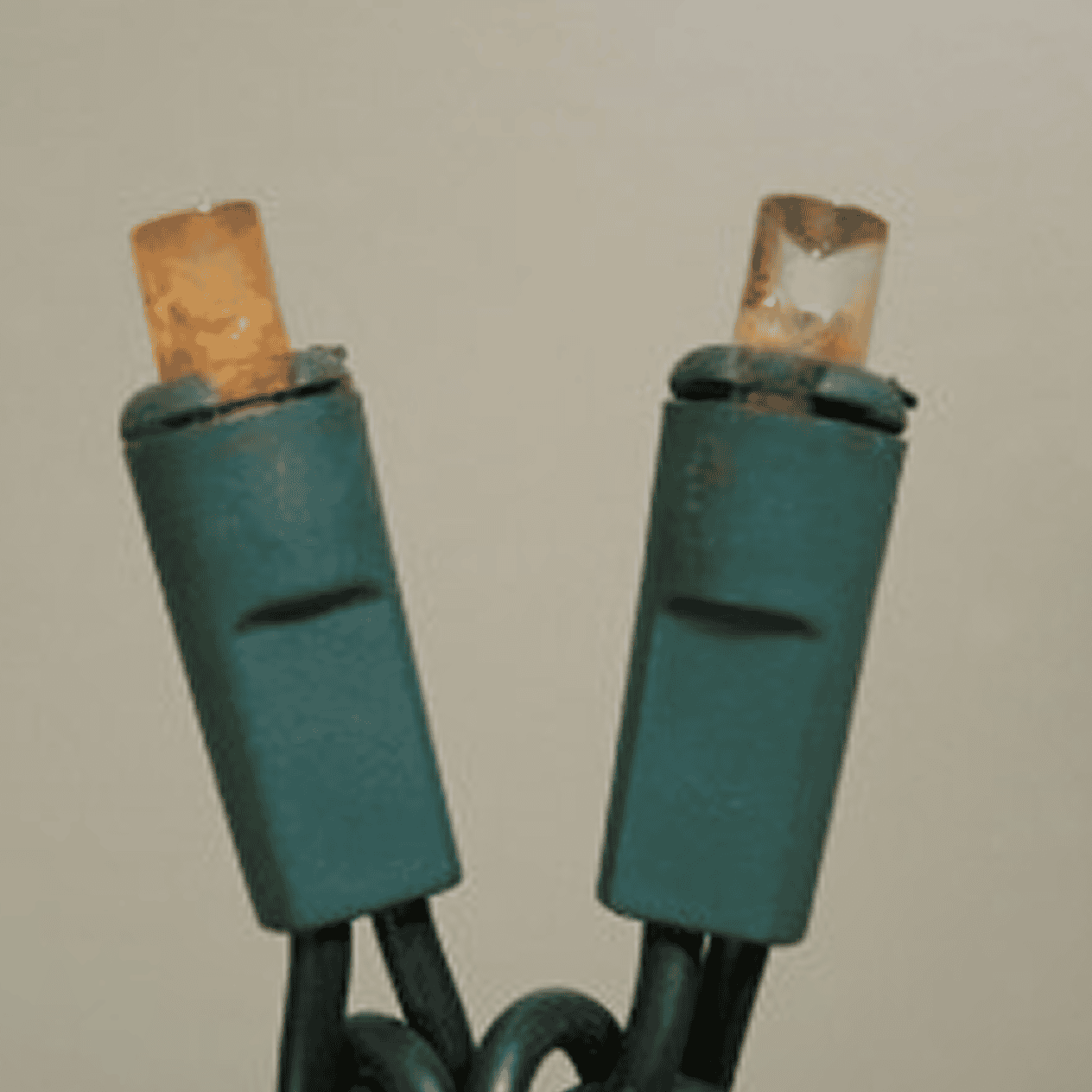
LEDs are polarity specific. If a bulb is removed and then turned around and reinserted, it will not work. If several bulbs have fallen out of the socket over time then it is almost impossible to determine which one is in backwards. In these cases, often the entire set will not light.
Rust issues make the best case for a non-replaceable LED because the leads of the LED and the copper wire of the cord are different materials, they are susceptible to rust. If any moisture is introduced into the environment of the bulb either in the form of condensation or actual water, it begins to rust. The rusting process is very fast. In these cases, the bulb will rust and literally fall out of the socket within only a few months.
THE NON-REPLACEABLE-SINGLE MOLD CONSTRUCTION LED IS COMPLETELY WATER TIGHT-NO MOISTURE CAN ENTER THE AREA OF THE CONNECTION AND THEREFORE NO RUST CAN OCCUR.
Let's Make Your Holidays Unforgettable
We're here to help you create memories that last a lifetime.