
Sub-Total: $0.00
How to Choose Holiday LEDs vs Christmas Light Emporium
| Blog
Last Updated: November 10, 2026
Quick Summary
Holiday leds are LED Christmas lights that use far less electricity than traditional bulbs, while Christmas Light Emporium is a retail seller of holiday lighting products. The choice comes down to buying a commodity string of lights or a display built to survive a decade of winters.
- LEDs dominate residential and commercial holiday-light sales, making up the overwhelming majority of sales.
- Commercial-grade lights use heavier wire, sealed connections, and replaceable bulbs; retail sets are built for one or two seasons.
- Wire and connections fail before bulbs, so check wire gauge, replaceable bulbs, and sealed connections.
- Run a five-season cost-per-season model with purchase price, electricity, replacement frequency, shipping, and warranty value.
- Permanent Christmas lights are track-mounted LED systems installed once and left up year-round, controlled by app or remote.
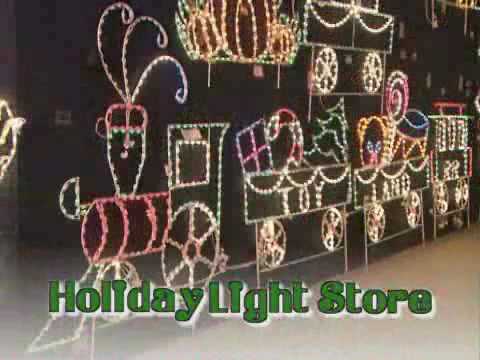
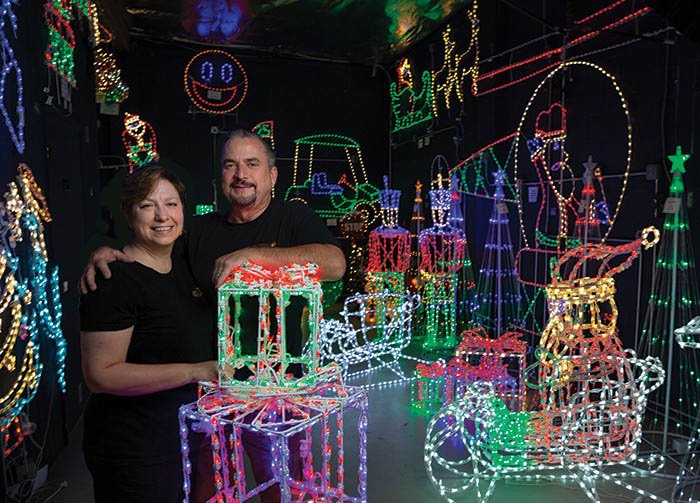
Ready for a display that lasts for years?The Holiday Light Store builds handmade, powder-coated animated light sculptures in the USA.
Table of Contents
- Holiday LEDs vs Christmas Light Emporium: What Buyers Need to Know
- LED vs Incandescent: Which Light Source Belongs on Your Display
- Commercial-Grade vs Retail-Grade Construction
- Durability and Expected Lifespan of Outdoor Christmas Lights
- Choosing Christmas Lights for House Exterior Displays
- Permanent Christmas Lights: When a Year-Round Install Makes Sense
- What Pro-Grade LED Christmas Lights Actually Cost Over Time
- Bulb Styles and Set Types: C7, C9, Mini, Net, and Icicle Lights
- Frequently Asked Questions
Holiday LEDs vs Christmas Light Emporium: What Buyers Need to Know
Holiday LEDs are light-emitting diode Christmas lights that use far less electricity than traditional bulbs, while Christmas Light Emporium is a retail seller of holiday lighting products. The holiday LEDs vs Christmas Light Emporium question really comes down to one thing: are you buying a commodity string of lights, or a display built to survive a decade of winters? At The Holiday Light Store, we build handmade, powder-coated light sculptures in the USA, so we have a strong view on which side of that line most buyers should land on.
Here is the short answer. If you want a quick, inexpensive string to wrap a porch rail for one season, retail LEDs are fine. If you want a display that still works in year eight, the comparison changes completely.
Below, we break down the light source, the construction, the real cost of ownership, and which buyer each path suits.
LED vs Incandescent: Which Light Source Belongs on Your Display
LED is the better light source for almost every outdoor display, with one honest exception: buyers chasing the exact warm glow of old-fashioned bulbs. LEDs dominate residential and commercial holiday-light sales, according to The Christmas Light Emporium’s holiday lighting industry trends page, which describes LEDs as the overwhelming majority of sales.
That dominance is not marketing. It comes down to how the two technologies behave.
Energy Consumption and Electricity Costs
LEDs consume far less energy than incandescent bulbs and produce almost no heat, which matters most when you are running hundreds of feet of lights. Incandescent strings convert much of their power into heat rather than light, so a large display draws more current and runs warmer. Warm running gear is safer gear, especially on dry garland and wood trim.
For a homeowner planning a big roofline and yard display, the practical difference shows up in two places: how many strings you can run on one circuit before a breaker trips, and how much the display adds to your bill across six weeks. LEDs win both.
Brightness, Color, and Light Quality
Modern LEDs are bright and vibrant, and color temperature is where the buying decision gets personal. Warm white LEDs mimic the soft amber of incandescent bulbs closely enough that most guests cannot tell the difference from the sidewalk. Cool white and RGB options open up color-changing effects that incandescent simply cannot do.
The contrarian point: some traditionalists still argue LEDs lack the charm of incandescent, a debate Adafruit has raised in its LED versus incandescent discussion. If vintage appearance is your whole goal, incandescent has a case. For everyone else, LED quality has closed the gap.
Commercial-Grade vs Retail-Grade Construction
Commercial-grade lights are built with heavier wire, sealed connections, and replaceable bulbs, while retail-grade sets are built to hit a price point for one or two seasons. That is the whole difference, and it is the difference that decides whether your display survives.
What most guides miss is that the bulb is rarely the failure point. The wire and the connections fail first.
For readers who want to go deeper on what separates the two tiers, our guide to professional grade holiday light display tips walks through the construction details that matter.
Wire gauge, insulation, and set construction
Wire gauge is the measure of conductor thickness, and lower gauge numbers mean thicker wire that carries more current with less voltage drop. Voltage drop is why the far end of a long cheap string looks dim. Heavier insulation resists cracking in cold, and sealed sockets keep moisture out of the contact points. When you compare sets, check three things: wire gauge, whether bulbs are replaceable, and whether connections are sealed.
Durability and Expected Lifespan of Outdoor Christmas Lights
Commercial-grade LED strings are built to last across many seasons, while cheaper retail-grade sets are more likely to need replacing sooner. The gap is not the LED itself, which is inherently long-lived. It is everything around the LED, and the failure modes are specific enough to inspect before you buy.
The four failure modes that decide outdoor lifespan:
- Insulation cracking from UV and cold. Sun degrades cheap PVC insulation, and repeated freeze-thaw cycles make it brittle. Once the jacket cracks, moisture reaches the conductor. Look for insulation rated for outdoor use and for cold flexibility.
- Corrosion at unsealed contacts. Moisture in an unsealed socket corrodes the contact points, which raises resistance, dims the bulb, and eventually kills the connection. Sealed sockets and dielectric grease at the contacts are the countermeasures.
- Voltage drop at the end of long runs. Thin wire and long runs cause the far end of a string to run dimmer and hotter, which shortens bulb life at the tail. Heavier wire gauge and shorter runs between power feeds reduce it. If the last few bulbs on a set always seem to be the ones that fail, voltage drop is the likely cause.
- Wind and mechanical stress. Poorly anchored sets work loose, abrade against gutters and shingles, and pull at connections. Clips, tension, and strain relief at the plug matter as much as the set itself.
What to inspect on the product page before you buy, for either retailer:
- Wire gauge. Lower gauge numbers mean thicker conductors. Compare the published gauge, not the marketing language.
- Replaceable versus molded bulbs. Socketed bulbs can be replaced individually; molded bulbs mean a dead bulb can darken a section.
- Sealed versus open connections. Sealed sockets and molded plugs resist moisture; open sockets need grease and attention.
- Rated operating temperature and outdoor listing. Check for an outdoor rating and a stated cold-temperature range.
- Warranty length and exclusions. Note what the warranty covers and whether it requires original packaging.
Watch out: storing lights in a loose tangle in a hot garage is the fastest way to crack insulation and shorten a set’s life, no matter how well it was built.
For ideas on making a display hold up season after season, see our piece on long lasting outdoor Christmas display ideas.
Choosing Christmas Lights for House Exterior Displays
Match the light type to the surface and the look you want. That single rule prevents most exterior-display mistakes.
- Rooflines and eaves: C9 bulbs on commercial-grade wire for bold, visible color from the street
- Trees and shrubs: mini lights or net lights for dense, even coverage
- Railings and porch columns: C7 or rope lights for clean, defined lines
- Windows and doorways: icicle lights for a classic draped look
Buy replaceable bulbs and buy spares. A display you can repair is a display you keep. Once your lights are up, our 7 steps to maintain outdoor holiday light displays covers the upkeep that keeps everything lit through the season.
Permanent Christmas Lights: When a Year-Round Install Makes Sense
Permanent Christmas lights are track-mounted LED systems installed once and left up year-round, controlled by app or remote. They make sense for homeowners who want holiday lighting without the annual ladder work and who plan to stay in the home long enough to justify the install.
Industry trend coverage from 1000Bulbs’ 2026 holiday lighting trends lists permanent outdoor lighting alongside smart controls and pixel effects as a leading direction for the category. The trade-off is real: permanent systems cost more upfront and lock you into one look, while removable commercial-grade displays let you change the design each year. If variety matters to you, stay removable.
What Pro-Grade LED Christmas Lights Actually Cost Over Time
Pro-grade LED lights cost more upfront but usually cost less per season of use. That is the honest framing, and it is the one most comparisons skip.
Build a cost-per-season model with five inputs: purchase price, electricity use, replacement frequency, shipping, and warranty value. Do this for each retailer’s equivalent product rather than comparing a premium set to a bargain set.
Purchase price. Compare like with like: same bulb style, same bulb count, same wire gauge, same lead and tail lengths.
Electricity use. LED strings draw a small fraction of what incandescent strings draw for the same bulb count, so the electricity line is usually the smallest part of the model for either retailer.
Replacement frequency. This is where the model separates.
Shipping. Shipping thresholds and seasonal surcharges change the math on small orders.
Warranty value. A warranty is only worth what the claim process costs you in time and return shipping.
Run the model over a five-season horizon and the pattern usually flips: the cheaper upfront set wins year one and loses by year three once replacements, shipping, and reinstallation hours are counted. The exact crossover depends on your display size and climate, so the number is yours to calculate, not ours to quote. For a fuller breakdown of whether LED alternatives pay off for homeowners, read are holiday LED alternatives worth it for homeowners.
Bulb Styles and Set Types: C7, C9, Mini, Net, and Icicle Lights
Bulb style determines the look, the spacing, and the power draw. Here is how the main types compare.
| Style | Typical Use | Look | Best For |
|---|---|---|---|
| C7 | Rooflines, railings | Medium, defined points | Clean architectural lines |
| C9 | Rooflines, large trees | Large, bold points | Street-visible color |
| Mini | Trees, shrubs, wreaths | Dense, twinkling | Full coverage |
| Net | Bushes, hedges | Even grid | Fast installation |
| Icicle | Eaves, porches | Draped, varied lengths | Classic winter look |
Bulb spacing matters as much as bulb size. Tighter spacing reads as a solid line of light; wider spacing reads as individual points. Decide which effect you want before you buy. For a side-by-side of alternatives and traditional sets, see Christmas light alternatives vs traditional lights.
The real challenge in holiday lighting is not picking a bulb. It is finding a display that still looks and works the way it did on day one, years from now. That is where The Holiday Light Store comes in. Our handmade outdoor light sculptures are powder-coated for weather resistance and built in the USA, with animated designs that give you a centerpiece no string of lights can match. Get started with The Holiday Light Store and build a display your family will look forward to every season.
Frequently Asked Questions
What is the difference between Holiday LEDs and The Christmas Light Emporium?
Holiday LEDs focuses on retrofit LED bulbs and light strings, while The Christmas Light Emporium sells a broader mix of holiday lighting and decor. When comparing holiday leds vs Christmas Light Emporium, check construction grade, wire gauge, warranty terms, and whether bulbs are replaceable. Read the product listings closely before you buy.
Are LED Christmas lights more energy-efficient than incandescent lights?
Yes. LEDs use a fraction of the electricity of incandescent bulbs and produce far less heat, which matters on long outdoor runs. LEDs are the dominant choice in residential and commercial holiday lighting. Lower power draw also means you can run more sets on one circuit without tripping breakers, a real advantage for large exterior displays.
What should I compare when buying outdoor Christmas lights?
Compare four things: construction grade (commercial vs retail), wire gauge and insulation, bulb replaceability, and the warranty. Also confirm indoor/outdoor rating and whether the set is expandable. These details decide how many seasons you get before replacement, which matters more than the sticker price.
What are the best Christmas lights for a house exterior?
For rooflines and trees, C9 or C7 LED strings are a common choice for bold, visible displays. Mini and icicle lights suit detail work on railings and windows. Match color temperature to your theme: warm white for traditional looks, RGB for animated effects. Buy sets rated for outdoor use and check the warranty before committing to a full-house install.

