
Sub-Total: $0.00
Buying Premium Outdoor Christmas Lights Online: What to Check
| Blog
Last Updated: November 21, 2026
Quick Summary
Premium outdoor Christmas lights are built to last through several seasons of rain, wind, snow, and sun, and construction matters more than price. Check the housing material, sealed connections, waterproof ratings, and warranty before buying premium outdoor Christmas lights online.
- Look for powder-coated or UV-resistant housings rather than thin painted surfaces that chip.
- Check whether an ingress rating covers the whole set or only the controller.
- Add 10 to 15 percent extra strand length for sag, corners, and the run to the outlet.
- Keep a lighting circuit at no more than 80 percent of its breaker rating.
- Confirm the warranty covers weather damage and check the return window and shipping terms.
Ready to light up your home for years?The Holiday Light Store offers handmade, powder-coated animated sculptures crafted in the USA.
Table of Contents
- What Makes Outdoor Christmas Lights Truly Premium
- Waterproof Outdoor Christmas Lights: Reading the Ratings
- Commercial-Grade Christmas Lights: Are They Worth the Cost?
- Lighting Your House Exterior: Sizing, Quantity and Electrical Planning
- Permanent Outdoor Christmas Lights for House Installations
- Total Cost of Ownership and Online Purchase Protections
- Your Next Step: Choosing a Premium Display for Your Home
- Frequently Asked Questions
Buying premium outdoor Christmas lights online is harder than it looks, because most product pages show a bright photo and a low price, and very little else. The Holiday Light Store offers handmade, powder-coated animated sculptures crafted in the USA. This guide explains what to check before you click “add to cart,” from ratings and construction to sizing, electrical load, and how to judge long-term value. Our aim is to help you spend on lights that survive your winters rather than ones that need replacing by next season.
Quick Picks:
- Best overall for lasting displays: a handmade, powder-coated animated sculpture built to withstand the elements
- Best for a strong budget start: a mini LED set with a clear weather rating and a documented warranty
- Best for roofline and fence lines: outdoor-rated icicle or strand lights in LED format
What Makes Outdoor Christmas Lights Truly Premium
A premium outdoor Christmas light is one that keeps working after several seasons of rain, wind, snow, and sun. Price alone does not tell you that. Construction does. Look at the housing material, the seal around the sockets and connectors, and whether the finish is powder-coated rather than a thin painted surface that chips.
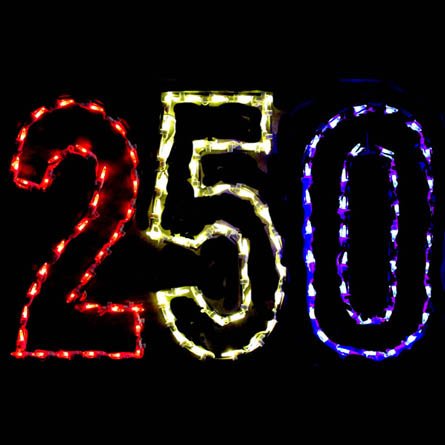
Many shoppers compare two products that look identical in photos. The difference often shows up in wire gauge, connector quality, and how the unit handles a cold, wet night. Ask the seller what the product is built from, and check whether the description names specific materials rather than vague phrases like “heavy duty.”
Waterproof Outdoor Christmas Lights: Reading the Ratings
Waterproof claims are easy to make and easy to misread. Start with the ingress rating if one is listed, and check whether it applies to the whole set or only the controller. For tested picks that hold up outdoors, see real-world outdoor light tests. A set rated for damp conditions is not the same as one rated for standing water or heavy snow.
Pay attention to the wording on the product page. “Outdoor rated” should be backed by a specific description of the seal, plug, or enclosure. If a seller only says “weatherproof” with no detail, ask what it means before you buy.
Our advice: look for these signs of real weather resistance:
- Sealed connections between strands, not just exposed plugs
- Powder-coated or UV-resistant housings
- Clear statements about operating temperature range
- A stated warranty that covers weather damage
Waterproof ratings matter most for lights that stay up all season. Lights you plan to take down after two weeks have looser requirements. Browse weather-resistant light sculptures rated for harsh conditions.
Commercial-Grade Christmas Lights: Are They Worth the Cost?
They are not automatically the right choice for everyone. Compare commercial-grade and traditional options side by side before deciding. A small porch display used for three weeks a year may not need commercial specifications. Think about how many years you expect the lights to last and how often you will move them. If you plan to build a display that grows each year, the extra durability often pays back over time.
Lighting Your House Exterior: Sizing, Quantity and Electrical Planning
Before you buy, measure the areas you plan to light and convert those measurements into strand quantities. Count linear feet of roofline, eaves, fence, railing, and pathway, then add 10 to 15 percent for sag, corners, and the run back to the outlet. A roofline that measures 60 feet typically needs about 70 feet of product once you account for the turns at gables and the drop to the power source.
Socket spacing changes the math more than most shoppers expect. A strand with 12-inch socket spacing delivers one bulb per foot, while 6-inch spacing doubles the bulb count over the same run. For a dense, premium look on a visible roofline, many installers prefer 6-inch spacing; for tree wraps and long fence runs where the viewing distance is greater, 12-inch spacing often reads as full at half the bulb count. Confirm the spacing on the spec sheet rather than guessing from a photo, because two strands of the same length can differ by dozens of bulbs.
For trees, wrap sizing follows the trunk-and-branch method: estimate the height and the widest circumference, then plan roughly one strand per foot of height for a light wrap and two to three strands per foot for a dense wrap. Pathways and walkways are usually sized by fixture count rather than strand length, with one stake or fixture every 6 to 8 feet on each side.
Electrical load is a step many buyers overlook. Each household circuit has a maximum load, and the common rule of thumb is to keep a lighting circuit at no more than 80 percent of its breaker rating for continuous use. A 15-amp circuit on a 120-volt supply carries about 1,800 watts; at the 80 percent guideline that is roughly 1,440 watts of connected lighting. Add up the stated wattage of every light set, sculpture, and controller on a single circuit before you plug in, and remember that LED sets draw a fraction of what incandescent sets draw for the same bulb count. Check the rules for displays per outlet before you finalize your layout.
A few planning steps that prevent most problems:
- Map outlets and extension cord runs before you order, and note which outlets sit on which circuit
- Use outdoor-rated extension cords sized to the load and the distance; a long, thin cord drops voltage and heats up
- Plug outdoor displays into GFCI-protected outlets, which are required for outdoor receptacles in most residential settings
- Spread the display across more than one circuit when the total approaches the 80 percent guideline
- Keep connections off the ground and out of standing water, and use sealed connectors where strands join
Watch out: daisy-chaining more strands than the manufacturer’s end-to-end rating allows can overheat the wire even when the total wattage looks modest, so check the maximum connected length printed on the set.
If you are unsure how many displays a circuit can handle, consult a licensed electrician before the season starts. Safe planning protects your house and your holiday.
The sizing and electrical figures below are the ones this section gives for planning a display.
| Planning item | Value from article | Note |
|---|---|---|
| Extra length for sag and turns | 10 to 15 percent | Added to measured linear feet |
| 12-inch socket spacing | One bulb per foot | Suits longer viewing distances |
| 6-inch socket spacing | Doubles bulb count | Denser look on visible rooflines |
| Pathway fixture spacing | One every 6 to 8 feet | Per side of the walkway |
| Lighting circuit load limit | 80 percent of breaker rating | 15-amp circuit is about 1,440 watts |
| Tree wrap planning | One strand per foot of height | Two to three per foot for dense wrap |
Permanent Outdoor Christmas Lights for House Installations
Permanent outdoor lighting is installed once and left in place, usually on rooflines, eaves, and trim. Its main advantage is convenience: you avoid hanging and removing lights every season. It also suits homeowners who want a consistent look year after year.
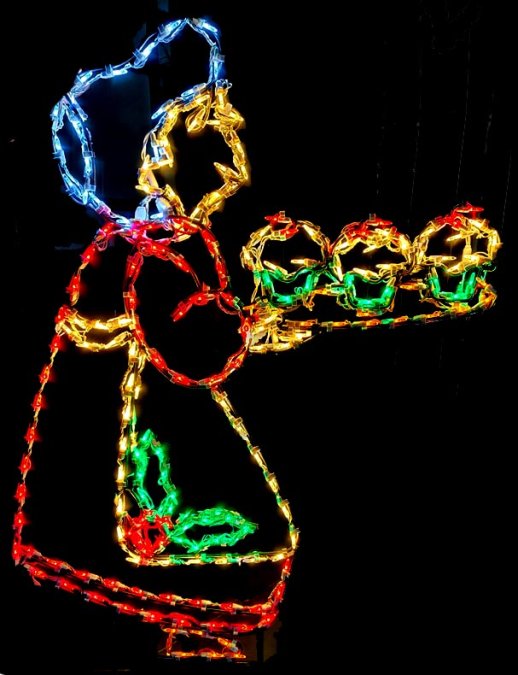
Permanent installations need more planning. Use clips and mounts designed for your surfaces, route wiring so it stays protected from water and sun, and plan access for future repairs. Confirm that the product is rated for continuous outdoor exposure, not just seasonal use.
Some permanent setups use smart controls. These can schedule displays, change colors, and let you adjust the show from a phone. Check the compatibility notes before you buy, especially if you plan to mix brands.
Total Cost of Ownership and Online Purchase Protections
The sticker price is only part of the cost. Total cost of ownership adds replacement bulbs and sections, the electricity used each season, the time spent hanging and removing lights, and the storage space the display consumes. A cheaper set that fails in two years can cost more than a durable one that lasts a decade, especially once you count the labor of re-hanging a failed run.
A simple way to compare two products is to divide the upfront price by the expected number of seasons and add the annual operating cost. LED sets draw a small fraction of the electricity of incandescent sets for the same bulb count, so the operating gap widens quickly on large displays. Replacement bulbs are the other recurring line item: sets with standard, widely available bulb bases are cheaper to maintain than proprietary bulbs that must be ordered from a single seller. Before you buy, confirm that the bulbs are replaceable and that the seller stocks replacements.
Online purchase protections deserve the same scrutiny as the product. Check these terms before you order:
- The warranty length and whether it covers weather damage, not just manufacturing defects
- The return window and who pays return shipping on a defective item
- Shipping times and any damage guarantee for items that arrive cracked or dead on arrival
- Whether the seller stocks replacement parts, fuses, and bulbs after the season ends
- Whether the seller publishes a physical business address and a working customer-service contact
Vague or missing terms are a warning sign, especially on marketplace listings where the seller may change from season to season.
Pricing depends on quantity, product type, and delivery options. For current prices and a quote on a specific display, visit The Holiday Light Store’s website directly.
Your Next Step: Choosing a Premium Display for Your Home
Choosing premium outdoor Christmas lights comes down to three questions: how the product is built, how it will be powered, and what happens if something goes wrong. Answer those honestly and the rest of the decision gets simpler.
We recommend starting with a plan for your space, checking the ratings and warranty, and then comparing handmade, animated options against standard light sets. The Holiday Light Store specializes in powder-coated, handmade animated light sculptures made in the USA. Visit our website to explore the collection and request current pricing for your project.
Frequently Asked Questions
Where can I buy high-quality outdoor Christmas lights?
Look for retailers that list weather ratings, bulb type, strand length and warranty terms on each product page, not just a generic description. Specialist holiday light stores, professional decorating suppliers and established online retailers usually publish this detail. The Holiday Light Store sells handmade, powder-coated outdoor displays made in the USA, and current pricing depends on the product, quantity and delivery, so check the website or request a quote for exact figures.
Are commercial-grade Christmas lights worth the extra cost?
They can be, especially if you want lights that hold up through several seasons of wind, rain and snow. For a single season of modest decorating, a standard set may be enough. For a permanent or elaborate display, the longer service life often offsets the higher upfront price, so compare expected years of use against the cost per year.
How can I tell whether Christmas lights are rated for outdoor use?
Check the packaging or product listing for an outdoor or weather-resistant rating, and look for a listing from a recognized testing laboratory such as UL. Lights marked for indoor use only should not be installed outdoors. Also confirm the connector type and the maximum number of strands that can be daisy-chained.
Are permanent outdoor Christmas lights a good alternative to seasonal lights?
Permanent installations can save time each year, since the lights stay mounted on the roofline, eaves and landscape and only need to be switched on and off. They do require a planned layout and occasional maintenance. Many homeowners find the upfront setup worthwhile if they decorate every season, but seasonal sets remain simpler if you prefer to change your display each year.

